The easiest way to abolish income tax for USA citizens and possibly American businesses could be international tarrifs. Already posted on how Tariffs May Improve Business and Provide Jobs for American-Made last year with links to others who prove points. It also includes the 2025 Economy results thus far on the White House slide posted on X and a recent video on 2026 Tarrifs and recent Suprreme Court decision.
Abolish Income Tax? Boost Business Growth!
The easiest way to abolish income tax for USA citizens and possibly American businesses could be international tarrifs. Already posted on how Tariffs May Improve Business and Provide Jobs for American-Made last year with links to others who prove points. It also includes the 2025 Economy results thus far on the White House slide posted on X and a recent video on 2026 Tarrifs and recent Suprreme Court decision.
Ethics Training for Employees?
When ethics thraing became all the rage in businesses in the 1980 and 1990's, many wondered why. Many are still wondering why. Many government contracts require certain "compliance" training be taught to for companies to get and keep thosee contracts. Do this requirements really make people more honorable and willing to do what is right or instead make them want to find "work-arounds" rather than have honest values and good morals. Ethics training in many corporations is a safety net, just-in-case they get a legal suit filed against them. It is not just ethics, the same legal safety net idea of training applies to sexual harrassment and diversity-type training as well. Why do people question these types of training?
- Why Most Ethics Training Sucks
- 4 Hard Truths About Ethics and Compliance Training
- Ethics Trainings Are Even Dumber Than You Think
- Ethics Training Is Missing the Mark
Perhaps the reason people do not see ethics training as relevant is that they believe the basic principles should have been established elsewhere. Morality and doing right is supposed to be developed in church. Good character, valuing others, respectful manners, and not stealing is supposed to be imbued by parents through motivation and discipline. Good conduct is supposed to be taught in schools. Ethics and honesty is supposed to be reienforced in college. So are ethics still passed up from youth to adulthood or is this an old-fashioned idea?
In the workforce, ethics is a leadership issue more than an employee issue. Leaders must be a character example of what they want the corporate ethos to be. If the manager pads his expense statements, how can he expect his employees to be honest? If a supervisor takes home office supplies for her children to use as their school supplies, how can she trust her employees not to steal from the company? Instead of (or at least along with) off-the-shelf ethics training, leaders need to be examples of the values they want in their employees. Perhaps leaders also need to get involved with their communities to help make sure the old ways of training up a child or teen in the way they should act and think are still taught.
|
Bookmark this post:
|
|
Understanding the Customer Experience
Customer eXperience (CX) is more than customer service centers or doing a customer satisfaction survey. Having the best price or product is great, but lots of other companies can claim the same. It is a strategy to become more successful by making business about every interaction the customer has with your product, service, brand, and company. The goal is to make every interaction pleasant for the customer so they feel good and return to buy more.
- "61% of consumers say their priorities keep changing as a result of everything going on in the world. As a result, the way they interact with brands is evolving, and so too is the idea of customer experience.." from Accenture Insights and Research
The customer experience starts with marketing materials that attract their attention. Marketing can be digital or print. The old marketing rule of seeing your brand at least three times before they buy my still ring true, but the methods for getting that attention have changed. Businesses can not rely on only one marketing effort that has worked I the past, they must use multiple channels to not only communicate with current customers but to reach potential new customers.
- On the Adobe for Business blog post explaining customer experience management, they explain "For today’s customers, their experience matters as much as your offerings. In fact, 86% of consumers say they’re willing to pay more to receive a superior customer experience. And 64% are more likely to recommend your brand if they have a great experience, leading to increased referral business and higher return on investment."
The customer experience means more than getting them into a physical store, to attend a sales meeting, or buy from a website. It consistently delivering a brand experience that makes customers want to come back. Loyal customers continue to drive business revenue only as long as they feel they are getting more than just a regular product or one-time service for their money. Remember they can always go elsewhere for a similar product or service if they are not getting a satisfactory experience with a company and brand,
- "80% of customers value their experience with a company as much as its products or services." is just one of the many statistics presented in the Customer Onboarding blog by OnRamp.
Communication is important to any customer who has a problem anywhere during the sales cycle or after delivery. If the customer reports a problem, they must be kept in the loop on how it is being solved. The quickest way to loose a customer is for them to have a bad experience and believe no one is listening to their complaints. When considering word-of-mouth, a really great or a slightly bad experience is often communicated faster than a good one - especially with social media making it easier to complain. Communication with the customer is also important when considering improving a process that involves them or developing a new product that replaces a popular version. So consider asking for feedback from those that order often to make sure the proposed updtes still offers them the value they expect.
According to Hubspot blog, a provider or customer satisfacton surveys and map templates to plan the customer journey "Excellent customer experience leads to loyal customers, who are likely to sing your praises via word-of-mouth marketing, which 92% of people trust more than advertising."
If the goal of great customer experiences is met. It may lead to customers giving great reviews and encouraging others to buy from the company as well. Word-of-mouth marketing then expands from social networking through company resources to trusted individuals sharing their experience with others who might be interested in what you offer. Sales go up, profits go up, and companies stay successful. Customers should always be treated like they are kings and queens, because without them there are no sales nor profits.
What is the Department of Government Efficiency (DOGE) doing?
There has been a lot of conflicting information on the purpose and processes of the Department of Government Efficiency (DOGE) created by the President of the United States. The new department aids in auditing for Cabinet members and consulting with their departments under Acting Administrator Amy Gleason (and team of business and engineering experts) as well reporting data findings to a Congressional Commitee. In the below news video, you will see interviews with the 2025 volunteer leadership and team members at DOGE regarding why they are there and some of what they have found.
To prevent misinformation and disinformation, visit the department website at doge.gov for accurate communications and data. Find cost savings in USA govenment and desired cuts for regulations adverse to business and economic expansion on the web pages. Until the rest of the website (home page is live X updates) can become real-time updating, check out DOGE Clock and Savings Per Taxpayer under US National Debt section on usdebtclock.org for minute-by-minute estimated savings.
Tariffs May Improve Business and Provide Jobs for American-Made
Prosperous America reports on their website how tariffs affect businesses, consumers, and people looking for jobs. They make it clear that moving manufacturing out of the country only helps the top management in big corporations as they can get cheap labor and products from overseas. However, this effects productivity while resulting in less jobs for Americans and lower pay for those working in those countries outside the United States of America. According to the website, tariffs benefit the working class most. With tariffs, management only benefits in making America greater by saving money if they move manufacturing back to the USA and hire locals. There is also the possible increase in profits if they advertise as "Made in America" to consumers who care about buying local.
Forbes also admits tariffs can encourage corporations to move back to America, which brings new jobs for citizens as well as helping local small businesses get more work. Yet, they also add a warning that it could mean small businesses have to work harder at finding local sources for quality supplies as they may lose their cheap overseas resources. However, they do not remind those same small businesses that their growth is more likely - if they make sure their products and services meet the neeeds and expectations of the large corporations who are returning manufacturing to the Undited States and searching for supply chains within the USA.
Although tariffs may actually help American businesses in the long run and offer more jobs to citizens, they may provide some pain to consumers for a short while until the move is complete. For instance, with tariffs on nearby countries, proces for food , fashion, and utilities may go up temporarily. To relieve the food issue for consumers, people in food supplies like grocers and restaurants will have to look toward local farmers for produce and meats. This in turn works out well for farmers to get more money and save the homes they almost lost due to government restrictions on raising crops and animals. While waiting for food prices to drop, NerdWallet suggests consumers can look for ways to reduce their spending. Consumers should also research farmer's markets and other healthy alternatives to food grown in Mexico or Canada.
The proposed reduction of government regulations should eventually reduce utility costs too, as restrictions on USA mining and drilling should be lifted. With those lifts, more well-paying jobs open up for Americans and high costs of bringing gas and other utilities from outside the USA will go down, This will help the economy grow. Reductions in government regulations are already helping areas hurt by natural disasters to recover and igniting building projects. With economic growth, the pain from rising costs should subside on products and service as more people are able to work and begin look forward to a better life.
Below are slides from White House showing economy improvements made in 2025 released in Jan. 2026. A video of Treasury Secretary Scott Bessent on tarriffs for 2026 from Feb.20, 2026 C-SPAN.
Five Forward Thinking Business Trends
Business leaders are looking to find the newest trends for pushing their organizations into a profitable future and sustainable ptograms. These trends will be considered when developing corporate visions and roadmaps. Each blog post or magazine article they read will state the the writer's or edtitor's predected top five or ten trends. All the materials may list two or three of the same items and then the remaining ones will be different from the last article read. From reading many December 2024 and January 2025 blogs and articles, below are the most repeated items.
AI, which means Artificial Intelligence, is at the top of almost every list. However, there seems to be some confusion on how this should be implemented in non-tecnical business. AI typically promises more than it can deliver, as has seen in badly written business articles and college term papers that were so obviously sourced and plagiarized. However, AI does do research well - it just is not creative as an author. In other words, do not let the old repuation AI got in past years deter consideration of AI for now and in the future. AI technology has come a long way in a few short years and now provides tools that can help businesses. The trick with AI is to find people who really understand it and for management to ask lots of questions to make sure it is a business fit that makes sense before investing in AI implementation. Although AI can provide for easy research, quick problem solving, and increased productivity; it often uses lots of energy so there is that hidden cost to be aware of.
Customer Experience has resurfaced as another top trend. Why customer service and satisfaction ever left as a key business component is a curious circumstance of cost cutting. Why would anyone want to alienate customers just to save money? There is no profit without customers!
Technology (which is not only AI-related) still makes the trend list too. It is called differenet things, but it is still all technology related! Concerns about cypersecurity is still high. Then there is the tasks of:updating current information systems, cleaning-up security data and inactive accounts, making websites and on-line stores more user friendly while impriving response time, updating handrware and software, and make sure the IT (information technology) staff consists ot people qualified to get it all done.
Workforce is another common theme when talking business trends. Some of the "experts" claim it is retention that should be the main concern of management. Whereas, others talk about motivation or having the correct personnel with skills needed, which has always been key to an organization's success. Skill needs may be technical or they could be social. Technical is necessary for IT and AI, as well as various types of technicians and engineers needed for certain types of companies. Social and team-building skills are important where collaboration, creativity, and innovation are desired. Communication skills are extremely key to service companies, sales departments, marketing plans, and where organizations want to make customers a priority commitment.
Another issue to consider is Deglobalization, which only a few of the articles referred to as economic resilience or geopolitical shifts. This has already begun in the United States of America and in many Eurpean countries. Due to tarriffs, taxation, politics, and other multi-country business issues; small niche companies and local businesses may soon do better than the bigger global companies when looking at profitability and increased market-sharepercentages.
NOTE to Readers: If you feel an important trend was left off this list, please add it as a comment to this post so others can learn about it and do research, if they desire. Please include in the comments why you believe it is a trend that should be considered,
|
Bookmark this post:
|
|
Great Years Ahead for Business
Will the 2024 presedential election affect the rise of new business and increased profits for existing companies? The stock market seems to indicate it will, as everything moved upward after the president was voted in and the value of the U.S. dollar also went up.
Can having a conservative in the highest office of the United States really make a difference for American business? A"Yes" answer is more than possible since the new president (for Jan.2025-Jan.2029 ), Donald Trump, is more than a politician who proved his abilitiy to overcome obstacles during a prior (Jan.2017-Jan.2021) term, he has successful businesses himself. Not only that has he surrounded himself with a team that plans to cut through the red tape of the bloated bureaucracies that are holding entrepreneurs and organizations back. The new presedential team promises to remove regulations that prevent economic growth and/or facilitate inflation. For both business and their product/service consumers (U.S.A. citizens), there is also the promise of less taxation, more available energy at lower costs, and reduced interest rates. If that happens, it should bolster profits for business and savings for Americans, thus helping the economy for almost everyone.
Can they really recover from the years (2021-2024) of cultural decline and economic disaster and do that within a four year term? Since their party now has a conservative majority, determined to make a difference for America, in both the House and Senate of Congress - the "Yes" is a higher probability if they will cooperate and work together. It looks like America will be a great place for businesses again and better years are directly ahead for everyone.
NOTE: Interesting post-election article on government leadership vs corruption and regulation: Trump’s Win Suggests We’re Nineveh, Not Sodom- Now It’s Time to Decontaminate the Place
Short URL for sharing post = https://tinyurl.com/2nwywxd6
|
Bookmark this post:
|
|
Leaders Must Understand Conflict Resolution
Managers and team leader who can manage conflict effectively will make a more positive influence on their employees and provide an example for problem solving. Workplace conflict is a natural occurrence and is going to happen anywhere people intereact and share ideas. Therefore, having a the sill of conflict resolution is an important business strategy. Leaders wh have the ability to not only manage conflict, but to teach individuals and teams to do the same will help move projects forward and keep the work environment feeling like a safe place for all.
Conflict management tips from consultants who have shared their expertise on this blog:
- Anger at Work
- Listening: The Cure for Ongoing Conflict
- Managing conflicts that are value driven
- Conflict, everybody has it! Can it be productive
|
Bookmark this post:
|
|
Requiring Skills Over College Degrees for Employee Placement
Once upon a time, people were hired for jobs based on the skills they had for doing the job and the desire to learn new tasks via on-the-job training. In the same line, people received career promotions based on their knowledge of the company values, personal productivity, ability to supervise work tasks, flexibility to step when an employee was out, and accountability to reaching company goals.
Then came the idea that college degrees were more important than actual ability when hiring new employees or promoting within the company. After all, they could attend training to learn company values and work processes. For some jobs the subject of the degree was key, for others the type of degree did not matter so much as as having the diploma. Training organzations grew to fill the demand for in-house trainng. At the same time, Human Resource officers were touting "general studies" as a rounded education that would result in a more relevant and modern work force. Followed by training departments being the first department to go if the company had to do lay-offs because products or services were not selling.
As higher education became less educational, the any degree at the Bachelor level and generic MBAs no longer help companies move forward and meet their goals, the age of "certification" and "specialization" came about. In other words, companies were returning to requiring skills necessary for immediate success on the job. Harvard Business Review says "Skills requirements will overtake degree requirements as the'paper ceiling crumbles." in 9 Trends That Will Shape Work in 2024 and Beyond. Finally, managers and Human Resources decide it is time to return to hiring for skills over eduction. This is not a move backwards, but a return to common sense for business success. Forbes agrees "Changes in hiring practices that emphasize selecting candidates with the specific experiences and skills needed for a role, rather than qualities such as educational attainment or age, are a part of the industry's response and will continue to be a strong trend." in their article The 10 Biggest Business Trends For 2024 Everyone Must Be Ready For Now.
Short URL for sharing = tinyurl.com/4zm7awbn
|
Bookmark this post:
|
|
Great List of Business Management and Success Quotes
This post is the beginning a few success quotes that will resonate with most business owners and professional people. Starting with the Will Rogers quote ("Even if you're on the right track, you'll get run over if you just sit there.") in the image, which applies to anyone with a vision or purpose - whether it is personal or professional. Mr. Rogers is basically saying if you have an idea to implement or a job to do, get moving on it or someone else will and you will get left behind feeling crushed by your lack of momemtun.
I want this to be a good list that continues to grow as a great reference for others. Please feel free to add your own favorite quote to the list by including it as a comment on this post.
"If you don't drive your business, you will be driven out of business." - B. C. Forbes
"Great companies are built on great products." - Elon Musk
"And while the law of competition may be sometimes hard for the individual, it is best for the race, because it ensures the survival of the fittest in every department." - Andrew Carnegie
"There are no secrets to success. It is the result of preparation, hard work, and learning from failure." - Colin Powell
"First-rate people hire first-rate people; second-rate people hire third-rate people." - Leo Rosten
|
Bookmark this post:
|
|
Low Value Programs Killing Business Is Killing Jobs
Do things that create profit matter for business anymore? Does a little money from the government outweigh the value of business reputation or the big money from customers?
It seems that the writer of the Forbes article "The Business Case For Diversity (DEI) May Be Backfiring" thinks it should not matter as much as the feelings of potential employees - not current staff. If a company does not value generating profit, then how can it afford to keep or hire employees? If it does not have innovative, trust-worthy, flexible, and qualified personnel; how can a business succeed? These programs are not resulting in qualified hires, instead they have led to experienced employees complaining about and leaving some companies. Most employees complaining said they felt less valued so their productivity, creativity, quality, and participation in teamwork suffered. Those employees then exposed why they left and showed samples of training matierials in videos and on social media. That exposure led to customers finding out, about the programs that were vastly different from what they valued and then looking for alternative companies to fill their needs.
Still want diversity and equality? "Why Diversity Programs Fail" in Harvard Business Review says to stop forcing re-written EEO-type initiatives based on race or gender, instead promote volunteer training and mentorship. The studies this article shares show people get along better working together equally, rather than being told what to do or not do based on gender or race criteria. It now seems that diversity and equity programs tend to divide people instead of increasing inclusiveness, motivation or unity. The technology areas seem to be suffering the most due to falling quality in systems because of limited qualified candidates in quota related hiring. So why do government agencies want force or reward these programs? Why do consultants still push the programs if they do not meet the client's needs? Are the consultants hurting the economy by personally getting richer if their client companies profilts decline or start on a path of going-out-of-busines?
Understand these terms and the history:
- DEI =Diversity, Equity, and Inclusion - 2021 Executive Order
- Government subsidized on-the-job re-training to promote exclusion
- Government sponsored education prior to joining workforce to discourage equality
- Education substituted SEL & CRT (mutation of Karl Marx's Critcal Theory)
- EEO =Equal[ity] Employment Opportunity (jobs) - 1964 Civil Rights Act of Congress
- Open education and job options to promote a diverse workforce at all levels
What is the difference between Equity and Equality? Basically, some are treated differently or all are treated equally. The majority of people want to be treated equal to others, a few want to be better than others, while none want to be less than others. Most workers find these forced re-training programs more divisive, not inclusive. So which kind of employer should companies try to be? Common sense says treat everyone the same. If not the same, at least based on productivity and responsibility instead of some physical trait that they have no control over. Will businesses expect education to change or will they continue to look for certifications rather than degrees for competent people? Will human resources have to go back to looking for qulaiied workers tather than some abstract number?
If installing these programs adversely affects ingenuity, morale, productivity, motivation, or profits; will it kill business? If businesses get boycotted when customers find out they are doing this newest training, will that affect their bottom-line profits? After seeing what this program does to business, should this acronym be redefined as Death to Empowerent and Innovation? (Or as recently published Discrimination, Exclusion, Indoctrination in Twitter MEME as well as the trending hashtags #DeathToDEI and DEIisDead...) If businesses die, where will people work? Logically, when there are less businesses, then there will be less jobs. Less jobs means killed jobs, which means fewer opportunities for employment.
POST SHORT URL = https://tinyurl.com/2s2pbdmn
|
Bookmark this post:
|
|
Real Marketing Options for Every Business
If you have tried lots of marketing options presented in articles or given to you by "next generation" advisors, have you had success? Maybe a little, but probably not a lot. So did you waste your money on marketing? Again, maybe a little if you learned what not to do but for sure if you are still listening to people who are giving you the wrong advice for the type of business you have. What works for big businesses may not work for small businesses. What works for selling retail products direct to consumers/customers - does not work for selling products and services to corporate clients.
If your company is a small business, instead of hiring a consultant, try some of the ideas in 14 Cheap and Effective Small-Business Marketing Strategies. Notice this article does not mention social media until option 10 and then only as a way to continue the efforts from other options. Do not jump on a social media platform immediately because someone told you it worked for them. To be effective social media must provide something for the reader and must target the people you want reading your posts.
- You may also want to check out blog posts on Marketing via: Website, Blogging, and Video Media or On-line Press Releases and Article Directories for more more tips related to options 5-10 in article above.
If you are Business to Business (B2B) product or service provider, according to The Ultimate Guide to B2B Marketing you should to concentrate on understanding your competition and the standard sales cycle to actually get sales. The guide compares B2B and B2C marketing differences in a simple chart. It also explains what you must do before marketing and then explains how to build a multi-faceted marketing strategy. Social media is more for business brand awareness and most likely will not directly result in sales, but it can be the first place corporate leaders and buyers may find out about you if your marketing plan is done well.
- B2C or B2B, you may also want to check out blog posts on Marketing via: To Blog or Not to Blog…that is the Expert’s Question or What Is the Best Alternative for Social Marketing?
|
Bookmark this post:
|
|
Business and Politics: Boycott Likely, BUYcott NOT
Even as many corporations see great losses and a few go bankrupt, their leadership is still failing to recognize that politics in marketing for business is not a good idea. Using ESG index and DEI initiatives as indicators for business is driving too many out-of-business by alienating customers and landing on "Go Woke Go Broke" boycott lists. Those alienated customers are now looking for entrepreneurs who start-up businesses with either the opposite politics or preferably no politics at all.
- Newsweek article "As 'Woke' Businesses Face Right-Wing Wrath, Culture War Capitalists Cash In" emphasized consumers are "are likely to boycott over a political position they don't like but are not likely to "buycott" over stances they agree with." Newsweek also published "Now Conservatives Embrace Boycotts and Regulations" and "Go Woke, Go Broke? Millennials Say It's True" which suggests this generation greatly disagrees with the supposed new marketing genius of young Gen-?.
- In blog post "Go Woke, Go Broke: 8 Examples of Companies Facing Consequences," a digital marketing professional explains "From a business mindset, politics should be a big no-go zone. If you are silent about an issue, you might receive pressure from a few activist groups, but things will likely quiet down soon enough, and people will forget about it."
- New York Post shared a former CEOs opinion in article "Woke, Inc: Why I’m blowing whistle on how corporate America is poisoning society." where he notes "... the answer is to do the hard work of rediscovering who we really are."
- The liberal-left VOX media website admits "ripple effects of conservative consumer activism are real" in finance and business article "The conservative boycott playbook is kind of working."
|
Bookmark this post:
|
|
Is Your Company Failing?
Although people are supposed to be back-at-work now, there is still a crisis in the world of business as inflation rises, regulations increase, and the economy has not yet recovered. Large and small companies continue going under for various reasons.
Wondering how to tell if the company you work for or the business you own is about to go out-of-business?
Check out these articles for employees:
- Signs Your Company Might Soon Go Belly-up from ZD Net
- 9 Red Flags that Layoffs or Closings May Be Imminent on Otterwize blog
Check out these articles for owners :
- The 4 Most Common Reasons a Small Business Fails via Investopedia (1. Financing Hurdles, 2. Inadequate Management, 3. Ineffective Business Planning, 4. Marketing Mishaps)
- Why Small Businesses Fail: Top 8 Reasons for Startup Failure by ZenBusiness
Who Controls American Business, Media, or Government?
For every example, you are most likely thinking it is United States citizens who have achieved the American dream. Some may even consider international and global reach as the people in control. Then there are those that worry Communist China is really the one gaining control of American business, media, and government. Is the USA hurling towards crisis inspired by a new type of economy based on marketing propaganda instead of quality products and preformance-based service? If it is USA citizens (native-born or legally naturalized) controlling corporate strategy, the American dream will continue to grow. If it is not, then either environmental and growth restrictions of globalization or communist government-owns everything will be the future resulting in the crushing death of the American dream.
Who do you think controls American business, media, or government? Is de-globalization the answer to save USA or European businesses? Share your thought in comments on this blog post.
POST SHORT URL = https://tinyurl.com/tczj8ukj
|
Bookmark this post:
|
|
Are Social Media Outlets Hiding Information From Users?
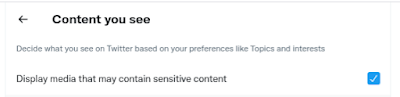
Well-known social media platforms continue hiding information from users by constantly changing how the information is displayed. When hiding started in 2020, Facebook users were encouraged to either view a "fact check" or "alternative view" article first before clicking through to what they wanted to view. Twitter did something similar with a friendly warning pop-up when users wanted to share "questionable" items and forcing user to choose to continue by clicking option in pop-up or outside of it to cancel communication. Now, the user sometimes also may click an additional option on the post to see one-time view of the article image link or video link. To prevent the complaints, users are allowed to go to a "security" option to turn-off the platform's latest change or opt-out of tracking history.
Example of Twitter Popup when Retweeting Website/Articles
Example of Twitter Text on select Website/Video as of 3-4-2022
Example of Twitter to Change View Settings (from above) to Prevent Blocking
Articles and videos continue to get blocked, not because they have been individually "fact checked," but due to the main URL of the .com/.net/.org being targeted for reasons known only to the social media provider. Or in the case of a video, it might it be a particular YouTube (and competitors), TV, or cable channel suppression. So where do users go to find truth/facts or lies/fiction now?
Yes that's a lot of embedded questions above that are definitely NOT hidden from view! Why? Because questions make you think. If you think, then you can form your own opinions. Sharing opinions in an acceptable and respectful way is allowed freedom of speech. The user should have the opportunity to decide, not the social network outlet. History will tell us if the user's decision is important to the platforms they use.
NOTE: Twitter changed ownership in 4th quarter 2022, now transparency of past and current processes is ongoing under the new management that is promoting "freedom of speech" but not necessarily freedom of reach? See December 2022 deletions and solutions articles plus January 2023 infographic, regarding #TwitterFiles compiled data of free speech suppression and hidden truths for political reasons currently being ignored by mainstream media news that proves partisan censorship.
ADDED NOTE: What about Facebook/Meta Media Mix? FB uses a little italicized i to make it look like users can get more related topic information, but often it tricks people by showing a list of prejudiced articles that express the social media owner's views. Although, upon occasion, it will share if a link site has/hasn't an FB page or other recent videos from that site only if it is "news" site. But they still limit or outright block free speech of most vocal conservatives, medical experts, Christians (formerly religious freedom to Bible), and politicians that do not buy into Zuckerberg's obvious malarkey meant only to get FB owner more money - not actually help people. In 2021, Facebook Admits in Court That ‘Fact Checks’ Are Just Opinion - in other words, what the boss wants communicated or NOT. Then the following year, at Congressional hearing, Facebook CEO blames the government for selected censorship.
Google is no longer in the social media game, but are they a "Big Tech" who is still censoring topics in searches and pushing political ads as actual news? What about those MSN searches, will their AI bots censor even more?
UPDATES: Did DNC government try to crush USA citizens' FREE SPEECH? Will it ever be fully restored on social media platforms? Will the government and "Big Tech" try to do it again?
|
Bookmark this post:
|
|
Uncovering Key Business Management Issues
There are so many articles and surveys trying to give leaders some sort of idea where to concentrate their efforts. However, they need to be read carefully for who the article is meant to help. Is it meant to help most corporations stay in-the-black, or to keep small businesses afloat in uncertain times, or is the article really meant to generate a business need that will actually profit the article writer more than those who read the article or post?
Two surveys that you may want to review include:
- Gartner HR Survey Reveals #1 Priority in 2022 will be Skills and Competencies
- Bloomberg Survey Shows Top 3 Concerns of CEOs in 2022
Is technology a big issue for business in 2022? Security companies are telling business mangers that cyber security should be their main concern to prevent business interruptions. However, only 57% of managers they surveyed agreed with that. At the same time, companies that offer telecommunications are still saying it is important to increase virtual meeting capability and phone app usage as the pandemic has taken various twists and turns. Are they right and are telecommunication companies ready to meet performance requirements? Does your company need new technology, better technology, or updates to telecommuting processes and policies?
Are social issues and/or DEI (Diversity, Equity, Inclusion) a current issue for business? Although consultants will tell you these are major concerns, do they really affect the bottom line? Yes, if you choose the wrong ones! Social awareness is supposed to be key to the newer generation of employees but following what maybe advertised as politically correct has cost many companies in loss of valuable customers due to boycotts the past few years. DEI was low on the Gartner survey as it does impact Human Resources, Not only as a training program, employees have left companies for bringing in propaganda disguised as "diversity training" that was insulting to their personal morals, values, ethics, and intelligence. These same employees took customers when they reported the that information on social media, which created a PR nightmare and devastated the image of those companies. Traditional versions of DEI and EEO to build trust and understanding. as well as prevent racial issues has been effective for decades. But some of the new "improved" versions may not be what they claim, instead they can build distrust and division. Employees working against each other can not be good for business. Management and HR must research heavily and attend the training themselves before they bring in anything that is not skills related to verify it meets their needs to include others not divide people. Consultants and training material providers want to make sales, just like you do - so verify the facts instead of believing the pitch. Make sure what you buy truly matches corporate culture and beliefs.
Is supply chain still a key issue for businesses to be concerned about? This concern did make the bloomberg survey as the continued pandemic has and will affect it. Whether your business is a supplier or uses supplies, you should be adapting your processes sustainable and resilient. Organizations will need to become streamline and agile. Products quality also needs to be maintained to ensure repeat customers. who are moving from a just-in-time ordering process to a storing for future purposes.
Seems like business managers may be better focused on the needs of their particular business than listening to the trends. Read the surveys to learn what others think, but keep in mind that is their impression based on their experience not yours. Focus on your compnay leadership, your customer service, and your process improvement. Yes, you can research "what's new" just be sure to check it through your professional lens to determine if it meets you needs or just send your dollars down the drain into another's profits. Jumping on a new bandwagon without really looking, means you are likely to totally miss your target!
POST SHORT URL = https://tinyurl.com/4963ad7a
|
Bookmark this post:
|
|
Holiday Concerns in Current Business Climate
|
Bookmark this post:
|
|
What Is the Best Alternative for Social Marketing?
It seems that social marketing is not what it used to be. Where is the profitability for companies to continue to have a social media presence with specialized pages or advertisements? What are the best alternatives for different types of businesses to reach the customer-base they want? If you have questions about what to do now, you may find some answers by reviewing the posts and articles below.
- Social Media Trends You May Want to Incorporate Into Your Marketing Strategy
- Brands move away from traditional social media platforms, as video content increases
- Smart Insights: Social media marketing trends
- 5 Social media marketing myths you should stop believing
- Harvard Business Review: The Era of Antisocial Social Media
- Why brands are turning away from big Instagram influencers
- Are you ready for the mega-shift from social media to private media?
If something peaks your curiosity, you can refine your own web search using concepts and ideas presented in the text of an article or post you read.
|
Bookmark this post:
|
|
Getting Back to Work
Studies show some employees feel they are more productive working from home, whereas others feel they accomplish more at-the-office. However, there are articles that show people want to get back to a workplace where they can collaborate in-person with others, not be distracted by children, and also return to developing their careers.
Safety options companies are considering to bring back their employees include:
- Having everyone in the office, warehouse, restaurant, or store continue to wear face masks provided by company
- Allowing only people with an approved vaccination and health card to come into company facilities (Rockefeller Foundation survey indicates 9 out of 10 companies prioritize this)
- Providing counseling and support and for this stressful situation to those concerned employees
- Educating employees through health professionals (live or video) on illness signals and stress signs to be aware of
- Continuing telecommuting and virtual meetings for unvaccinated employees
- Offering on-and-off site workday scheduling options for experienced employees they wish to keep
- Using more on-line options for interviewing, hiring, onboarding, and training to fill open positions
Company owners and managers need to decide what IS or is NOT working for the profitability and productivity of their organizations. After issues are reviewed, re-opening options considered, and best policy/process is chosen to get people back to work, then communicate that to current and potential employees via company website. Send emails or letters to employees to let them know the highlights and refer them to website for details and new information as decisions are made.
|
Bookmark this post:
|
|