Showing posts with label conflict. Show all posts

Leaders Must Understand Conflict Resolution


Managers and team leader who can manage conflict effectively will make a more positive influence on their employees and provide an example for problem solving.  Workplace conflict is a natural occurrence and is going to happen anywhere people intereact and share ideas.  Therefore, having a the sill of conflict resolution is an important business strategy.  Leaders wh have the ability to not only manage conflict, but to teach individuals and teams to do the same will help move projects forward and keep the work environment feeling like a safe place for all.  

Conflict management tips from consultants who have shared their expertise on this blog:

Yes conflict can be uncomfortable, but hiding from it instead of confrontig the underlying issues will greatly interfere with current and future work that require interfacing with others.  The natural human instinct during conflict is flight or fight.  Instead of avoiding conflict, it should be seen as an opportunity to look at an issue from all sides to determine the best approach, find common ground, get commitment to the best solution, and develop a process that will best for everyone involved.  Conflict resoultion requires effective training to overcome typical instincts and deal with conflict before it can get out-of-hand.  Skill development required for good conflict management training include: effective listening, interpersonal communication, negotiation, and collaboration.  

For more advie on conflict resolution, check out these longer articles:

Are Social Media Outlets Hiding Information From Users?

In the past few years, we have learned that most social media providers are not about their users or about promoting free speech as was designated as their original purpose for existing.  No, they are a business with customers who are not necessarily the same as their users.  Most social media outlets are about profit through advertising dollars and promoting the beliefs/values of the outlet's owners.  Social media  platforms keep changing who they allow to voice opinions on their networks and what they will allow the remaining network audience to see.   A few of these actions may be directed at preventing "misinformation" or encouraging  "disinformation" to appease the government or other powers, but more are about controlling what facts social media users see. Whether hiding select information is done at the direction of owners, advertisers, or politicians is not shared with their users.  

POST SHORT URL = https://tinyurl.com/5n7ye8e9

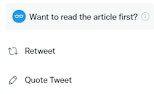
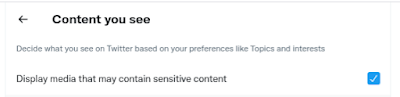
Well-known social media platforms continue hiding information from users by constantly changing how the information is displayed.  When hiding started in 2020, Facebook users were encouraged to either view a "fact check" or "alternative view" article first before clicking through to what they wanted to view.  Twitter did something similar with a friendly warning pop-up when users wanted to share "questionable" items and forcing user to choose to continue by clicking option in pop-up or outside of it to cancel communication.  Now, the user sometimes also may click an additional option on the post to see one-time view of the article image link or video link.  To prevent the complaints, users are allowed to go to a "security" option to turn-off the platform's latest change or opt-out of tracking history. 

     Example of Twitter Popup when Retweeting Website/Articles 

     Example of Twitter Text on select Website/Video as of 3-4-2022 


     Example of Twitter Text on Blocked Video Sites as of 6-1-2022


     Example of Twitter to Change View Settings (from above) to Prevent Blocking 


     Example of Twitter Terms to End Accounts for ANY/NO reason effective 6-10-22


Are these new changes letting users control more of what they see or is it still about the social media outlet keeping control of that?  Will users take the 2nd or 3rd click/step required to see the hidden information from selected sites?  Will other platforms choose to change "sensitive" view options that make it sound like users will see pornography instead of platform-deemed "questionable" information.  Are social media owners hoping users will not exercise their personal choice by making the extra effort to click again?  Is the reason platforms are requiring the extra clicks so they can track user choices better or find out what is most popular topics?  Will any of it make a difference to owner's profits, advertiser's bottom-line, or to the user's free speech?  Do social media users still have the option to gather their own facts and form their own opinions? 

Articles and videos continue to get blocked, not because they have been individually "fact checked," but due to the main URL of the .com/.net/.org being targeted for reasons known only to the social media provider.  Or in the case of a video, it might it be a particular YouTube (and competitors), TV, or cable channel suppression.  So where do users go to find truth/facts or lies/fiction now?   

Yes   that's a lot of embedded questions above that are definitely NOT hidden from view!  Why?  Because  questions make you think.  If you think, then you can form your own opinions.  Sharing opinions in an acceptable and respectful way is allowed freedom of speech. The user should have the opportunity to decide, not the social network outlet.  History will tell us if the user's decision is important to the platforms they use.

NOTE:  Twitter changed ownership in 4th quarter 2022, now transparency of past and current processes is ongoing under the new management that is promoting "freedom of speech" but not necessarily freedom of reach?  See December 2022 deletions and solutions articles plus January 2023 infographic, regarding #TwitterFiles compiled data of free speech suppression and hidden truths for political reasons currently being ignored by mainstream media news that proves partisan censorship. 

ADDED NOTE: What about Facebook/Meta Media Mix? FB uses a little italicized i to make it look like users can get more related topic information, but often it tricks people by showing a list of prejudiced articles that express the social media owner's views. Although, upon occasion, it will share if a link site has/hasn't an FB page or other recent videos from that site only if it is "news" site.  But they still limit or outright  block free speech of most vocal conservatives, medical experts, Christians (formerly religious freedom to Bible), and politicians that do not buy into Zuckerberg's obvious malarkey meant only to get FB owner more money - not actually help people. In 2021, Facebook Admits in Court That ‘Fact Checks’ Are Just Opinion - in other words, what the boss wants communicated or NOT.  Then the following year, at Congressional hearing, Facebook CEO blames the government for selected censorship.

Google is no longer in the social media game, but are they a "Big Tech" who is still censoring topics in searches and pushing political ads as actual news? What about those MSN searches, will their AI bots censor even more?

UPDATES: Did DNC government try to crush USA citizens' FREE SPEECH?  Will it ever be fully restored on social media platforms? Will the government and "Big Tech" try to do it again?

How To Resolve Conflict in Workplace – Ninja Style

Conflict in the workplace can be positive for problem solving.  However, it can have a negative effect on teams if not managed well.  In the 2 minute video below, Padraig Hyland explains how to minimize conflict and resolve it within teams.  2 Conflict styles and their benefits are covered:   competing and accommodating.


Team Tension: the Why of Causes and How of Management

Is your team experiencing tension or conflict?  It could be occurring because each member has their own work style and personality traits.  We have discussed personality at work before in relation to the various tools for DiSC styles.  The 16 minute video below presents the same concept using IOPT Style.  It is interesting as a quick introduction to why tension exists at work and how different work styles can result in misinterpretation (input processing) leading to unnecessary conflict or resistance (output processing). 

The idea is similar to SDI profile for technical professionals or MBTI types of HRDQ styles for all workers.  Some of the concepts presented in video are a little technical but the psychology is well researched and documented, so keep watching and you will have a better understanding of why knowing the different types can improve team member communication.   

NOTE:  For a clever idea on measuring team or project milestones, check out Organize This with Style blog post with links to multiple poems including Using Poems to Mark Project Milestones.


Managing conflicts that are value driven

These conflicts defy solution because they are driven by inner values. These can destroy homes, families, companies, and nations. We are stuck with our value system. Only rarely, do people shfit their values. It's better to say, "Let's agree to disagree" when we're in a value-driven conflict. The issue isn't resolved, but the relationship stays alive. That's good.

This is what happens in value-driven conflicts:
1. There is no insistence on seeking the facts
2. There is seldom review of the circumstances
3. Each side is solidly immovable - the other person is consistently "wrong"
4. Not much interest in listening to the other's position
5. Seeking a better way is the goal - only when you see it my way!
6. "Cynicism" replaces "Trust" in finding a better way to come together

Some examples of value-driven conflicts...
- I believe in getting ahead, financially, any way I can. vs I believe what you're about to do is illegal.
- I believe our country will be better off we buy American-made goods. Vs I believe it's better to get the "best price" we can - no matter who made it.
- I believe we ought to help the less fortunate in every way we can. vs I believe we ought to let "the cream rise to the top".
- I believe in marriage. vs I believe the institution is not necessary.
- I believe in mercy killing. vs I believe in preserving life - no matter the circumstances.

However, here are some things I have learned to do to manage conflict...
1. Try to hold your tongue when you're feeling angry. You'll be glad you did.
2. De-escalate the conflict as soon as you realize you are stuck.
3. Deeply listen to the other's position (though hard to do at times.)
4. Demonstrate respect for the person - though you may disagree with the issue.
5. Learn the specific set of communication skills for managing conflict.
6. Hold on, as long as you can, to optimism that the conflict is resolvable.
7. Know your best option, if the issue is value-driven, is to "agree to disagree".
8. Leave behind "entitlement" and "blaming" as you communicate.
9. Healthy outcomes from skillfully managed conflict
10. Restored respect for the individual
11. Possible solution that neither of you thought of before
12. Better understanding of how to skillfully handle future conflicts
13. Relationship lives on and may even flourish
14. Unhealthy outcomes from poorly managed conflict
15. Long-term distrust and disregard
16. Stalemate on an issue or situation
17. Physical health issues - high blood pressure, palpitations, headaches, etc.
18. Relationship becomes toxic and may, eventually, die

If you feel the conflict is problem solved instead of values driven, see previous post.

Annoying Coworkers!

The theme of my conversations this week seemed to be annoying coworkers. I spoke to a number of friends and family members who were all frustrated because of the actions of their coworkers.
“I am so annoyed at him,” one person said. “I can not believe she did that,” said another. “Why does he have such a bad attitude?” exclaimed still another. Amongst their complaints were: the over-controller, the perfectionist, the lack-of-communicator, and the interferer. Do you work with these types of coworkers too?
After hearing their complaints, I thought it would be worthwhile for others to hear the tips I shared in dealing with annoying coworkers:
Avoid the coworker – Easier said then done! If you do not have to work closely with the individual, avoid interaction. Go to lunch at a different time; send emails instead of talking face to face, etc. This will allow you to avoid stressful interaction situations. However, this first tip is usually impractical because of how closely people work in teams these days. On to other tips…
Benefit of the doubt – Give your annoying coworker the benefit of the doubt, they might not know they are annoying. Most people have blind spots that others can see but they do not. I call these blind spots the “you have spinach in your teeth, your slip is showing and your fly is open.” If you knew any one of these things you would fix it, right?
Understand motives – Most people do not wake up in the morning thinking “I plan to make my coworkers miserable today.” People behave based on their needs not your needs. The person who is over-controlling might feel very insecure. The perfectionist might be worried about mistakes that will reflect badly on them. The lack-of-communicator probably only needs limited information himself so he thinks everyone is like him. The interferer might be trying to be helpful.
Provide feedback – Feedback is best given when you are calm. Think about how you can “hold a mirror” up to your coworker’s behavior so they can see what you see. Keep your statements professional, non-judgmental indicating the business impact. Example, “I see that you redid that report I finished yesterday. I feel like I can learn from your experience but only if I get to do it myself. The next time, can you please just coach me through the changes and let me try it?”
Put any two plus people together for eight hours a day and you are bound to find things that drive you crazy about each other. With mutual respect and understanding I am confident that everyone can find a common ground to get along.

Managing conflicts that can be problem solved

What happens to us when we get into conflict?
We BOTH know we're right!
I see the event this way. You see the event that way.
I want to go north. You want to go south.
I believe coffee is bad for you. You think coffee is good for you.
I don't want to be home by midnight. You have to be home by midnight.

Behavioralists often categorize conflict in these two ways:
1. Conflicts that can be problem solved (discussed in this post)
2. Conflicts that are values-driven (discussed in next post)

Let’s talk about conflicts that can be problem-solved first. These conflicts are often problem-solved by the following:
1. Studying the facts
2. Reviewing the circumstances
3. Analyzing the history of trust
4. Listening to possible causes
5. Seeking a better way, a higher way, a more productive way
6. Trusting that the problem does, indeed, have a solution
7. Staying in the communication cycle until a solution or compromise emerges.

Some examples:
- Around the house, we get into conflict about fixing things that are broken. We conflict about ongoing family needs. We find conflict when a family income is reduced.
- Within the family, we get into conflict over raising the kids. We get into family conflicts over myriads of reasons - most solved by compromise or reasoning.
- At work, we disagree over ways to increase our bottom-line. We must innovate new ways of generating revenue. We must build our market share by advertising, networking, developing public relations. We must satisfy the needs of our workforce (our associates and our team members). We must constantly improve our processes. All of these are full of conflict situations.

When you find yourself in conflict, I would encourage you to "move quickly".
1. There is no guarantee that any of us have "Tomorrow". 2. The sooner you settle the disagreement, the quicker you can get back to playing.3. The sooner you find a solution, the sooner you'll be able to get back to business.4. You don't have control over time. If you are waiting for "Time" to heal it, consider this: businesses go under while people wait, and families lose loved ones while people wait. Don't be a "Someday Fool".
5. You do have control over your choices.
That's how I recommend we manage conflict. Don't let it "manage" you!

Your Managing Conflict Homework:1. Today, think of someone with whom you are "cross-wise".
2. Today, make a phone call and set an appointment to discuss.
3. Stay in the conversation long enough to hear and be heard.
4. Remain positive that there is a healthy outcome. (Keep going; it takes time.)
5. Work it out...in most situations there is a creative solution.
Time may (or may not) be on your side.

The Managers Buffet - What will you pick?

We have been writing about productivity for some time now. But how productive are you really? A friend who is also a comedian noted recently that when she has to work 60-hour weeks, she spends 59 hours bitching about working a 60-hour week. I find for me, when I have been hitting it too hard, I am very prone to zone out over my desktop due to fatigue, retracing steps to determine where I left that folder, phone number, even my list of "to do's" or car keys. I have been wondering what helps our productivity (besides sleep).

Two psych types, Mark Scullard and Jeffrey Sugerman, executives at Inscape Publishing asked 5,945 recent training participants about the types of courses that would greatly increase their effectiveness at work. They gathered some of the most frequently sought courses as shown in their data bank. Then they asked everyone to rank their choices. Below is the test they used. Pick some out for yourself that you could use. Then compare it to their results submitted by a broad range of business executives.

Here is a list of training course offerings. Rank the courses by those that would greatly increase your effectiveness at work. (Courses are listed alphabetically)
1. Building emotional intelligence _______
2. Communication skills _____
3. Computer skills _____
4. Critical thinking skills _____
5. Dealing with conflict or difficult people _____
6. Financial skills ______
7. Innovative thinking skills ______
8. Leadership skills _____
9. Management skills _____
10. Negotiation skills ______
11. Project management _____
12. Sales skills ______
13. Stress management ______
14. Technical knowledge related to my job ______
15. Time management ______
16. Working more effectively on a team _____
Circle your top five numbers. Consider why you chose those particular skill sets. What would more skill in those areas do for you and your career?

I was surprised that respondents chose what they did. Number 1 was not surprising however. It was leadership skills (#8) and I hear both employees soliciting that type of training for their company as well as managers saying they need more skills for handling situations that baffle them. However, coming in at # 3 was technical knowledge (# 14). What has been a commonly held belief in the Training industry has been agreement that it was not technical skill sets that were needed but how to manage and lead people. Apparently, the feeling that we need to lock down some technical skills was powerful and needs to be honored. What is not known is what kind of technical skills are needed. Perhaps to counter that surprising hard choice was what came in as response # 2. Respondents noted that dealing with conflict (# 5) and difficult people is an area where more skill building could be useful. I just lunched with a coaching client today and in the conversation, he revealed that conflict was very difficult for him. I believe that few seek conflict but how we deal with it can be very revealing to our management work.

As a coach and a speaker, I would be eager to hear from you as to your choices and why you chose them. I would also like to know where you go to get those needs filled. Since I teach at SMU, our professional Ed courses offer many of these skills, or could if the need becomes identified. In coaching, I find that successful people arm themselves with the skills they need to continue their journey up the ladder. You can do and increase your value and productivity as you do it.


Listening: The Cure for Ongoing Conflict

What happens during conflict? Usually people stop listening while each person tries to convince the other person, and/or other people that their position is the correct one.

Wikipedia defines conflict as the: “actual or perceived opposition of needs, values and interests.” Interesting that the definition includes the word perceived. Quite often we’re so busy trying to state and restate our own point of view, we neglect to listen and if we did, we would find that maybe we are really on the same side, just stating it differently.

Put any two or more people together day in and day out and there is bound to be conflict. Conflict does not always have to be a negative event. By questioning the status quo and having an alternative point of view, positive change can occur. How we handle conflict is the key to whether conflict is constructive or destructive to our relationships. The author Max Lucade, says: “Conflict is inevitable, but combat is optional.” We have a choice on how we handle conflict and how much time we spend talking and how much time listening.

Consider the following conflict situation between two executives. One manages the quality function and one the operations department. There is a natural built-in conflict between these two groups which provides the checks and balances which are important for an organization. But in this situation, the two leaders let their personality differences interfere with their ability to listen and resolve differences. They were in an endless cycle of finding fault with the other’s ideas and actions. After a while they involved other people in their conflict by criticizing each other in company wide meetings and with each of their employee groups, forcing people to “take sides.” Six months into the conflict the organization now had two “camps” each trying to find things to complain about the other department in an endless game of “I am right and you are wrong.”

After several coaching sessions where each leader learned and practiced listening and conflict resolution skills, they jointly developed an action plan on how they would interact in the future. At the conclusion of our rather short session, since they both agreed so easily, one manager asked: “is that really all there is?” The solution seemed so simple. When they started listening and supporting each other, the destructive pattern of behavior had stopped.

Here are a few of the skills they learned:
· Manage Nonverbal Behaviors Effectively – Be aware of body language, inflection, tone, and facial expression. Do you appear open to other ideas? Remember it is not just what you say but how you say it.
· Benefit of the Doubt Approach – Giving someone the benefit of the doubt means that you don’t draw conclusions about what was said or did until you truly understand the situation. This helps to defuse defensive reactions.
· Inquiry Methods – Encourage others to explain their data, assumptions, and reasoning. Ask probing questions to make sure you understand their point of view before stating your own.

The two leaders are now in the process of becoming listening role models and coaches for the employees on their teams.

Anger at Work – How does it happen?

Knowing how to use emotions is critical to leadership success. In this and the next posts, I am going to focus on the emotion of anger – one of the most difficult ones to handle, particularly in the workplace. Here is my perspective on this sometimes confusing emotion.

Anger is a legitimate feeling – not bad in itself. Anger, like all emotions, is a signal. It sends a message to you about reality – or a perception, that something or someone has harmed or hurt you in some way. Perhaps you are experiencing an insult, or a boundary has been crossed. This could be a broken agreement, a way someone spoke to you, or about you. Some event has happened that signals mistrust or a breach in a relationship is at play. It is often accompanied by several bodily sensations such as a surge of energy, tightness in the chest, rise in body temperature, feeling flushed, eyes opening widely. Anger often registers on our faces, if we allow it. When it works as it should, we are compelled towards action. Everything in our body is telling us to move. That is the mechanism of protection. The emotion of anger is telling you to stand up for yourself, or address an issue.

Anger is a normal reality in organizational life. Work involves many opportunities for conflict, and the better you are able to deal with them, the more power you will exhibit. In fact, to the extent that you cannot handle anger, you will be unable to lead others, create trust on your teams and solve problems. There are many situations in which a leader experiences anger. The more important and personal they are, the more intensely anger will be felt. Here are a few examples:

  • A person you trust betrays you
  • An employee makes a serious mistake with a client and business is lost
  • You have discussed problematic behavior with another and she continues to do it, despite previous commitments
  • A co-worker dominates meetings with long stories that derails your team’s agenda
  • A peer regularly fails to respond on a timely basis to your emails
  • A promise is repeatedly broken with a variety of excuses
  • A vendor charges you far more than was promised
  • Anyone who has been in leadership for a significant period of time has experienced more than a few of these examples. They are often unavoidable.
That is my perspective on the emotion of anger. Since knowing how to use emotions is critical to leadership success, come back for my follow-ups on the emotion of anger with what the results are on work relationships and ideas what leaders can do about anger.